A few years ago, I attended a business networking event where I watched two companies announce a sponsorship partnership that looked perfect on paper. Both had impressive reputations, large audiences, and generous marketing budgets. Yet just a few months later, the collaboration quietly ended.
The problem wasn’t the money—it was the match.
That experience completely changed how I think about event sponsorships. Since then, I’ve learned that successful partnerships happen when the right companies connect with the right events, not simply when the biggest sponsor writes the biggest check.
If you’re researching quartz events sponsor matching companies, you’re probably looking for smarter ways to connect brands with events that genuinely fit their goals. In this guide, I’ll explain how sponsor matching works, why it matters, and what both event organizers and sponsors should look for before signing an agreement.
What Are Quartz Events Sponsor Matching Companies?
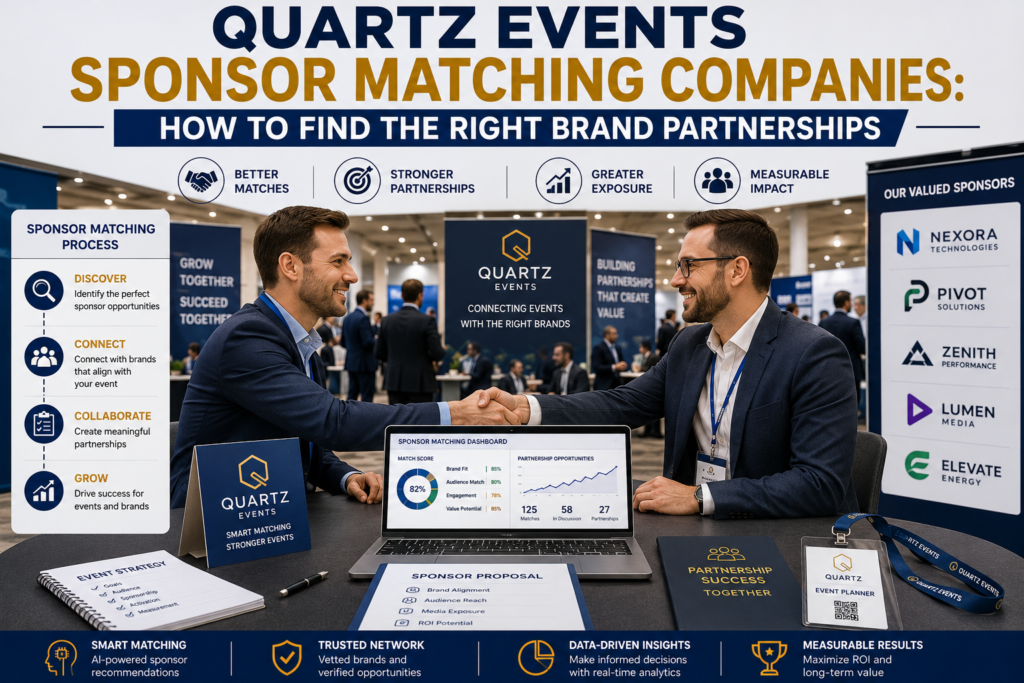
Quartz events sponsor matching companies are businesses or platforms that help event organizers connect with sponsors whose goals, audience, and values align with the event.
Instead of cold-emailing hundreds of companies and hoping someone replies, these matching services use data, industry knowledge, and networking to recommend sponsorship opportunities that make sense for everyone involved.
Think of them as a matchmaking service—but for brands and events.
Their role often includes:
- Identifying suitable sponsors
- Understanding sponsor objectives
- Matching audiences and industries
- Negotiating sponsorship packages
- Tracking campaign performance
- Building long-term partnerships
Read Also: TVLIO: What It Is, Features, Benefits, Risks, and Everything You Need to Know (2026 Guide)
Why Sponsor Matching Matters More Than Ever
Today’s sponsors expect more than having their logo printed on a banner.
They want measurable business results.
Whether the goal is lead generation, brand awareness, product launches, or customer engagement, companies want sponsorships that deliver real value.
A strong sponsor matching process helps create partnerships that benefit everyone.
Benefits for Event Organizers
- Better sponsorship revenue
- Higher sponsor retention
- Stronger event reputation
- More meaningful brand collaborations
- Easier future sponsorship sales
Benefits for Sponsors
- Access to the right audience
- Higher marketing ROI
- Better brand visibility
- Authentic customer engagement
- Valuable networking opportunities
How Quartz Events Sponsor Matching Companies Work
Although every company has its own process, most follow a similar workflow.
1. Understanding the Event
The first step involves learning about the event itself.
This usually includes:
- Industry
- Event size
- Audience demographics
- Location
- Budget
- Previous sponsors
- Marketing opportunities
The more information available, the easier it becomes to identify ideal partners.
2. Identifying Sponsor Goals
Not every sponsor wants the same outcome.
Some companies want:
- Sales
- Brand awareness
- Product demonstrations
- Investor exposure
- Recruiting opportunities
- Community engagement
Matching companies take these goals into account before recommending partnerships.
3. Audience Alignment
One of the biggest factors in successful event sponsorship matching is audience compatibility.
For example:
A software company may benefit from sponsoring a technology conference.
A fitness brand is likely a stronger fit for a wellness expo than a finance summit.
The closer the audience alignment, the greater the chances of success.
4. Creating Sponsorship Packages
Rather than offering generic sponsorship tiers, experienced matching companies often help create customized packages.
These may include:
- Speaking opportunities
- Exhibition booths
- VIP networking sessions
- Sponsored workshops
- Digital advertising
- Social media promotion
- Email marketing inclusion
Customized packages often generate better results than one-size-fits-all sponsorships.
What Makes a Good Sponsor Match?
From what I’ve seen, the best partnerships usually share a few common characteristics.
Shared Target Audience
Both organizations should serve similar customer groups.
Similar Brand Values
Audiences notice when brands genuinely fit an event’s mission.
Clear Marketing Goals
Successful sponsorships begin with clear expectations.
Everyone should know what success looks like before the event starts.
Long-Term Potential
The strongest partnerships often continue beyond a single event.
Many successful sponsors return year after year because the relationship continues delivering value.
My Personal Tips for Better Sponsor Matching
Over time, I’ve picked up a few lessons that have saved both time and frustration.
Tip #1: Don’t Chase Every Sponsor
Early on, I believed contacting as many companies as possible was the best strategy.
It wasn’t.
Focusing on companies that genuinely matched the audience produced far better conversations and a much higher response rate.
Quality almost always beats quantity.
Tip #2: Research Before Reaching Out
Whenever I prepare a sponsorship proposal, I spend time learning about the company’s recent marketing campaigns, products, and audience.
That extra research helps personalize the pitch and shows genuine interest.
Companies notice the difference.
Industries That Commonly Use Sponsor Matching Services
Sponsor matching isn’t limited to one sector.
These services are popular across many industries, including:
- Technology conferences
- Healthcare events
- Startup expos
- Education conferences
- Business networking events
- Sports competitions
- Charity fundraisers
- Music festivals
- Sustainability events
- Marketing conferences
Each industry has unique sponsorship opportunities and target audiences.
Common Challenges in Sponsor Matching
Even experienced organizers encounter obstacles.
Some of the most common include:
Budget Differences
Sponsors and organizers don’t always agree on pricing.
Flexible sponsorship packages can help bridge this gap.
Audience Mismatch
A large audience isn’t always the right audience.
Relevance matters far more than size.
Unrealistic Expectations
Sponsors sometimes expect immediate sales from a single event.
Setting measurable and realistic goals helps avoid disappointment.
Limited Data
Without attendee insights or previous event performance, matching companies have less information to work with.
Collecting useful event analytics improves future sponsorship opportunities.
Related Keywords You Should Know
When researching this topic, you’ll often encounter related terms such as:
- event sponsorship
- sponsorship matching platform
- corporate sponsorship opportunities
- brand partnership services
- conference sponsorship solutions
Understanding these concepts can help you evaluate different providers and sponsorship strategies.
Choosing the Right Sponsor Matching Company
If you’re evaluating different services, consider asking these questions:
- Do they specialize in your industry?
- Can they provide previous success stories?
- How do they identify potential sponsors?
- What reporting and analytics do they offer?
- Do they help negotiate sponsorship agreements?
- Can they support long-term partnerships?
A good provider should focus on relationships—not simply introductions.
Best Practices for Successful Sponsorship Partnerships
Here are a few habits I’ve found especially helpful:
- Define clear sponsorship goals.
- Know your audience well.
- Personalize every sponsorship proposal.
- Measure campaign performance.
- Communicate regularly before and after the event.
- Treat sponsors like long-term partners rather than one-time customers.
These simple practices often lead to stronger relationships and repeat sponsorships.
Final Thoughts on Quartz Events Sponsor Matching Companies
Finding the right quartz events sponsor matching companies isn’t about connecting with the largest brands—it’s about building partnerships that make sense for everyone involved.
When organizers understand their audience and sponsors understand their objectives, both sides benefit from stronger engagement, better marketing results, and lasting professional relationships.
From my own experience, the best sponsorships happen when there’s genuine alignment rather than simply financial opportunity. Taking the time to research potential partners, personalize outreach, and focus on long-term value can make a remarkable difference.
If you’re planning an event or looking for new sponsorship opportunities, start by identifying partners who truly fit your audience and mission. A thoughtful approach today can lead to successful collaborations for years to come.